



Skip to content

Security Assessment & Penetration TestingA finding you cannot reproduce is an opinion.

Choose an external assessment, or a penetration test of agreed systems, people or premises under written authorization. You get findings, reproduction steps and fixes.

Packages

Start with a package

Four packages, each with its price on the page. Pick one and buy it online.

Billing

What you get

What you walk away with.

  1. Findings with reproduction steps and evidence
  2. Severity rated against your environment
  3. Attack narrative showing how findings chain
  4. Detection gap analysis mapped to MITRE ATT&CK
  5. Remediation guidance at code or configuration level
  6. Free retest within the engagement window

Sounds like

You might recognize one of these.

  • The pen test came back with sixty findings and we do not know what to fix first.

  • A customer requires an annual third-party test before they will sign.

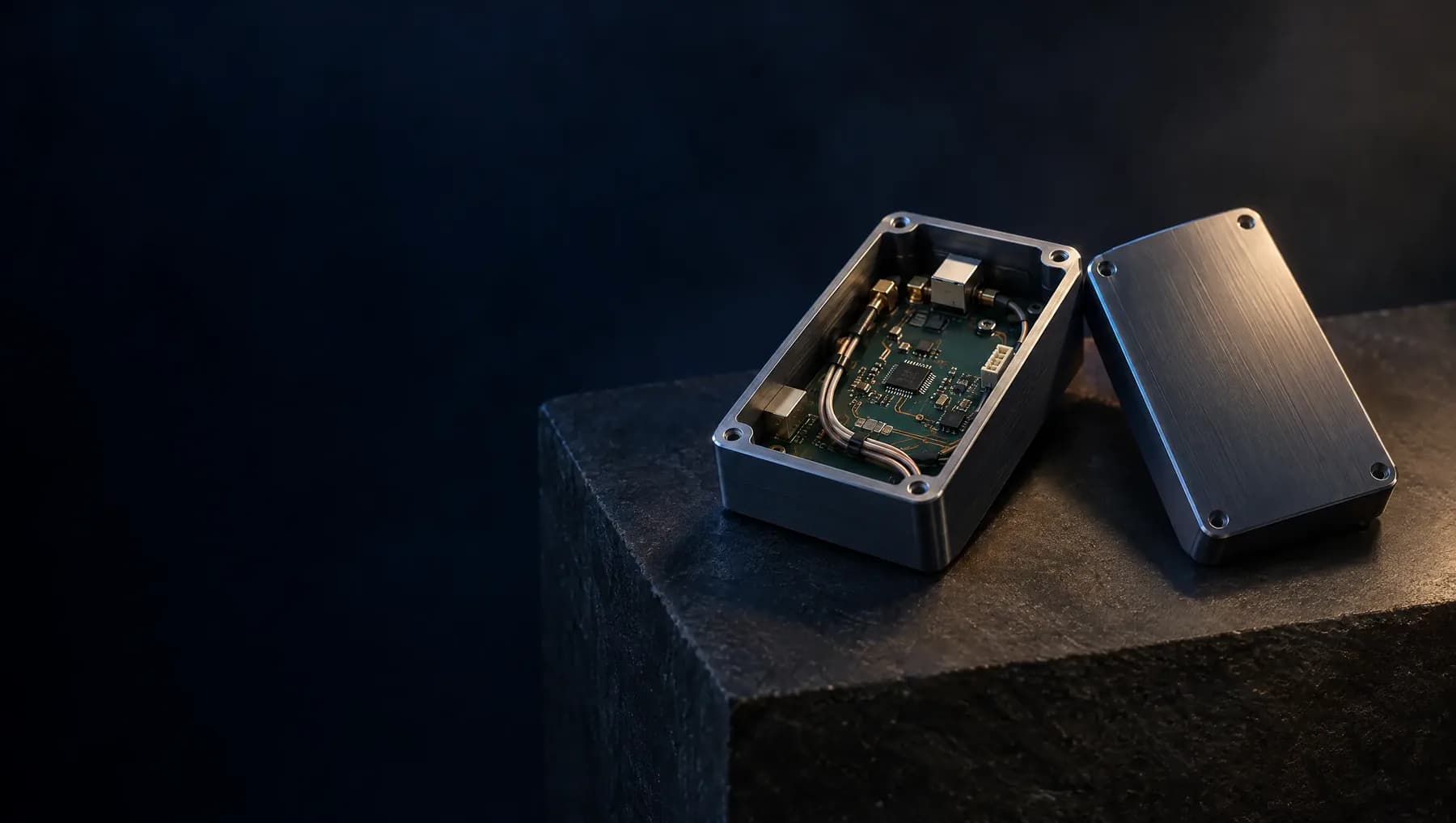
  • We ship a device and we have no idea what happens if someone opens it.

  • We built an AI feature and we are not sure what a hostile prompt can make it do.

How it runs

Phases and timing.

  1. 3 business days

    External security assessment

    A fixed-price read of what an attacker sees first: certificates, security headers, mail-spoofing DNS records, and whether anyone can report a problem to you. Findings are yours to keep, with a walkthrough call.

  2. 1–3 weeks

    Scoped penetration test

    One application, network or cloud environment, tested manually against a defined scope, with the report and a walkthrough session. Retest included.

  3. 3–6 weeks

    Adversary emulation

    Objective-based testing against a stated goal, with an agreed rules-of-engagement document and a purple-team debrief with your defenders.

Want a first look before you decide? Run the free domain security check and see what an outsider can read about your domain today.

The detail

What the scope includes.

Cybersecurity Assessment

This is a fixed-price assessment of what an outsider can see about your business: your websites, exposed systems, leaked passwords, and public information about your staff. You get a report that ranks each finding by risk and explains how to fix it.

More about Cybersecurity Assessment

It comes in two versions:

Standard
A search over everything your business exposes publicly, with nothing attacked
Intrusive
Active testing of agreed systems, with written permission, operating limits and rules of engagement set before testing starts

When this service fits

  • You want an initial assessment to set your security baseline
  • You want a routine checkup of your security posture
  • You want to confirm that a fix actually worked
  • You want to meet a regulatory requirement
  • You want to check that your team follows your security standards

Penetration Test

We test your systems the way an attacker would, within limits we agree on in writing before testing starts. Depending on your needs, we test a single application, your network, or the whole business. You get a report on each vulnerability: how we found it, how serious it is, and how to fix it.

More about Penetration Test

A test can cover any of three areas:

Network
Inside and outside your network: databases, sign-in points and network equipment
Social engineering
Targeted emails, phone calls and online research aimed at information that should stay private
Physical
At your location: getting past locks and access controls, and on-site reconnaissance

When this service fits

  • You want to see the ways an attacker could get in today
  • You want a routine, in-depth test of your security
  • You want to confirm that a fix actually worked
  • You want to meet a regulatory requirement
  • You want to check that your team follows your security standards
Show all 6 parts of the scope
  • Application and API penetration testing

    Manual testing against OWASP ASVS and the API Top 10, including authorization, business-logic abuse and the multi-step flows scanners never reach.

  • Network, cloud and identity assessment

    External and internal network testing, cloud configuration and identity privilege-escalation paths, because most breaches use a credential, not an exploit. Plant segments are out of scope unless named.

  • Plant and control networks

    Passive capture first. Nothing active touches a live controller, HMI or safety system without written approval naming the asset and the window. Our ICS work is bench research, not a live plant.

  • Adversary emulation and purple teaming

    Named MITRE ATT&CK techniques run against your environment with your defenders watching, so the deliverable is a detection gap analysis, not a trophy.

  • AI and LLM red teaming

    Prompt injection through retrieved content, tool abuse, data exfiltration through model context, and authorization built into a system prompt instead of code.

  • Continuous vulnerability research

    Between engagements we hunt on public disclosure programs. Authorization is checked before the first packet, and a validator blocks any claim no captured request supports. The harness produces leads, not findings; most were low severity or already known.

Show the tools we use
Application
  • Burp Suite
  • OWASP ASVS
  • Semgrep
  • Custom tooling
Network & cloud
  • Nmap
  • Nessus
  • Metasploit
  • Hashcat
  • Aircrack-ng
Emulation
  • MITRE ATT&CK
  • Elastic
  • Sysmon

Questions

Common questions.

  • Write to us with the domains to read and who receives the findings. We confirm scope in writing, then the read takes three business days using only what is already public, with no access to your systems. The price is the one published on this page, invoiced net 30 by purchase card, ACH or purchase order; ask for a formal quote if your office needs one.

  • A scanner tells you which versions are old. It cannot chain three low-severity issues into an account takeover or reason about your business logic. Scanning should run continuously; testing tells you whether the controls work.

  • Not without asking. The rules of engagement are written first and name the destructive classes: denial of service, data modification, credential lockout, social engineering of named staff, and persistence or implants. Those happen only off production or with written go-ahead, and a documented stop procedure names the number to call.

  • Yes. An attestation letter suitable to share with a customer or an auditor, describing scope, dates, methodology and remediation status, without disclosing the findings themselves.

  • For breadth, yes: enumeration, correlating hosts, reading more source than a person can. Never for the claim itself: a finding cannot be written up unless every endpoint, parameter and response in it maps to a request we actually sent. You get fewer findings than from a tool, and you do not spend engineer time disproving them.

  • We will, but an independent tester is worth more, because you inherit the assumptions you made while building. Where the assurance is the point, use someone else; we are happy to be that someone for a system another firm delivered.

The other practices

Where this practice stops, and who picks it up.

Finding out whether a system is actually secure, proving it to whoever is asking, and training the people an attacker will try first.

Next step

Tell us what’s breaking.

Forty-five minutes, no charge. We’ll say what we’d do, what it would likely cost, and whether the thing you’re worried about is actually your biggest risk.

Reply
A person replies, not a sequence: within one business day, from someone who would be on the engagement.