
Plant & Control Network SecurityOT security assessment: measure the plant network before anyone sends it a packet.
An OT or ICS security assessment reads what a plant network carries and compares it with what the drawing says, then tests only what you approve. It runs in this order: a passive capture that sends nothing to the plant, the traffic checked against your drawing, remote access as its own question, segmentation, and active testing last, only with written approval naming the asset and the window. You get a plain answer on plant-to-office separation, an inventory of what talks to what, and findings in fix order.
Packages
Start with a package
Four packages, each with its price on the page. Pick one and buy it online.
$199/month
Billed monthly
$182.42/month
Billed yearly
$499/month
Billed monthly
$457.42/month
Billed yearly
- Scammers stopped from sending email as you
- Your website and systems scanned every week
- Your email settings checked every week
- Everything in the 1 to 10 plan
- Covers up to 50 people
$199/month
after a one-time setup fee
- A site planned, designed and built for you
- Hosting and updates every month
$499/month
Billed monthly
$457.42/month
Billed yearly
$999/month
Billed monthly
$915.75/month
Billed yearly
- Your Google profile, fully set up
- A Google post every week
- 2 social posts a week
- Everything in Get found
- 4 social posts a week
- Your top 10 Google searches tracked
from$500/month
after a one-time setup fee
- Your data gathered from the tools you use
- A first analysis that answers your questions
- New findings every month
What you get
What you walk away with.
- A plain answer on plant-to-office separation
- Inventory of what talks to what, from the capture
- Your drawing, marked where traffic disagrees
- Each remote-access path, with its account
- Findings with capture evidence, impact and fix order
- Free retest within the engagement window
Sounds like
You might recognize one of these.
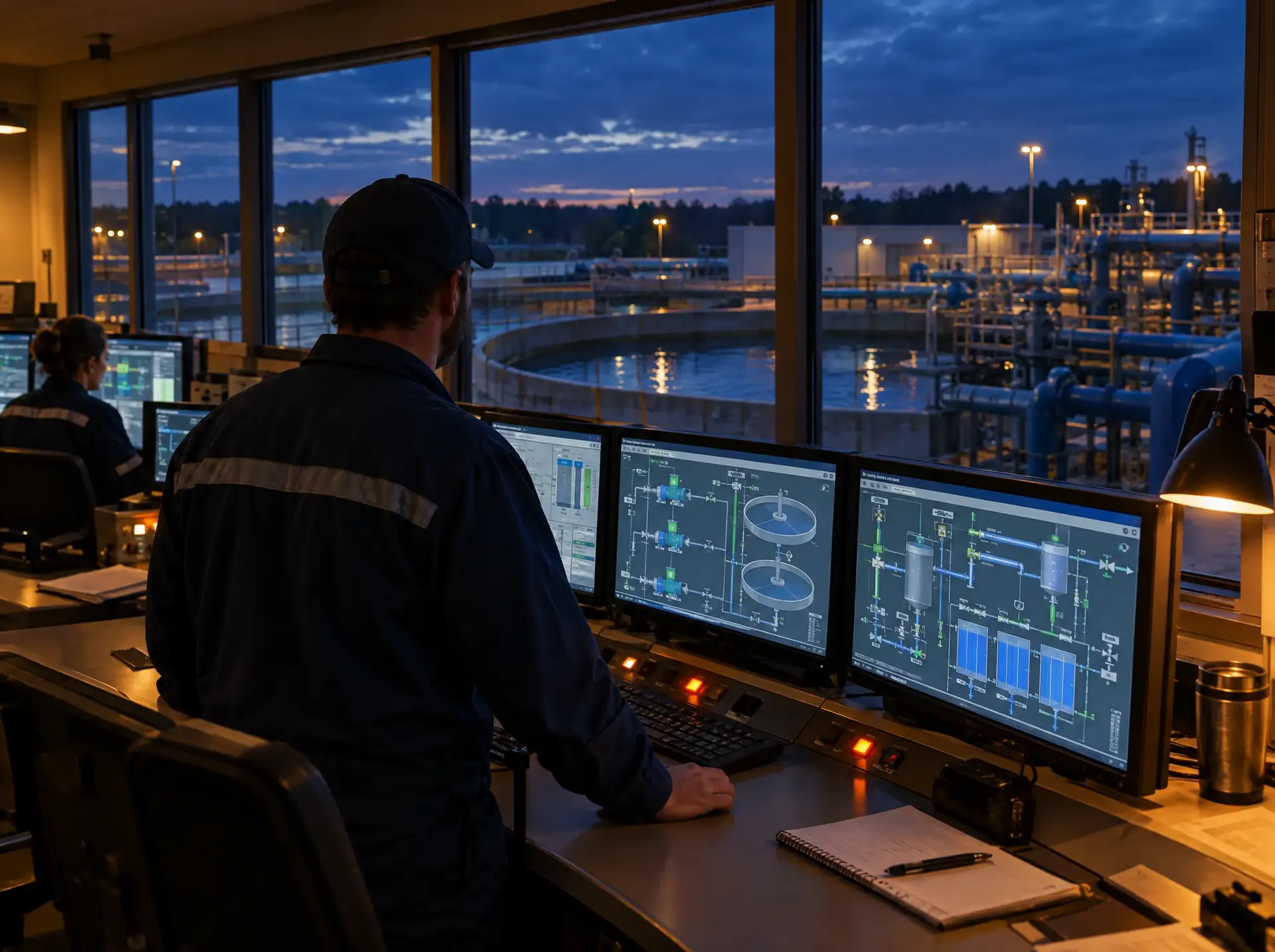
Our insurer asked whether the plant is separated from the office, and nobody could say for sure.
An integrator set up remote access during commissioning and we do not know who still has it.
The last time someone scanned the control network, a line went down.
The network drawing is three years old and nobody trusts it.
The detail
What the scope includes.
Show all 6 parts of the scope
Passive capture first
What the plant network actually carries, collected without sending anything to it. Active scanning has knocked production offline, and an old controller may not survive it.
The drawing, checked against the traffic
We check the drawing against the traffic in four places: VLANs that are not boundaries, dual-homed machines bridging the firewall, unrecorded remote access, and changes since commissioning.
Remote access, as its own question
Who can reach the plant from outside, by which path, with which account. The usual fix is named accounts per vendor engineer and access that expires.
Segmentation before detection
Inventory first, then segmentation, then monitoring. A monitored flat network tells you an attack is spreading; a segmented one limits how far it gets.
Active testing only with approval
Written approval naming the asset and the window comes first. Where a test would be unsafe on production, it runs on a spare or not at all.
Industrial anomaly research
Our published ICS work is bench research on a multi-vendor PLC bench and public labeled captures, not a live plant, and we say so before you scope anything.
Show the tools we use
- Capture and analysis
- Wireshark
- Packet clustering
- TLSH
- Control systems
- Modbus/TCP
- Ladder logic
- Guidance
- NIST SP 800-82
Questions
Common questions.
It covers what the plant network carries, how that compares with your drawing, who can reach the plant from outside, and where the network should be separated. The order is passive capture first, the traffic checked against the drawing in four places, remote access, segmentation, and active testing last and only with written approval. The result is findings with capture evidence, impact and fix order.
Active testing is the last step of the assessment, not the first, and it needs written approval naming the asset and the window. Where a test would be unsafe on production, it runs on a spare or not at all. Our published ICS work is bench research, not a live plant.
Not to start. The first step is a passive capture, which sends nothing to the plant network. Anything active needs your written approval naming the asset and the window, and a test that would be unsafe on production runs on a spare or not at all.
Our published ICS work is bench research: a multi-vendor PLC bench and public labeled captures, under a federally funded research program, peer-reviewed at IEEE CARS 2024. We say so before you scope anything. The passive capture is the step that sends nothing to your plant, so it is where the work starts.
Anomaly Detection in ICS Networks with Fuzzy Hashing (opens in a new tab), IEEE Cyber Awareness and Research Symposium (CARS) 2024
Your network owner or integrator configures the mirror port or tap, and we say which switch and which port. A change on a live switch is an active step, so it needs the same written approval as any other. The capture is your data: it is used only for the engagement, then returned and certified destroyed to NIST SP 800-88.
Your network drawing if there is one, a mirror port or tap that your integrator configures, an integrator contact, and the sites and segments in scope, which set the price. Firewall and remote-access gateway configurations help with the remote-access paths. Anything active also needs written approval naming the asset and the window.
It is evidence for parts of them, not an audit against any. The inventory and the marked-up drawing are where an IEC 62443 zone and conduit model starts, and the same record of what talks to what feeds the part of an AWIA risk and resilience assessment that covers your electronic and automated systems. It is not a NERC CIP compliance audit, and we certify against none of the three.
Yes, if there is one. It is the statement of intent the traffic is checked against. If there is no drawing, the capture becomes the first one.
The price is agreed with the scope before the work starts, and it depends on how many sites and network segments there are. The external assessment is our one published fixed price, and it reads your public surface, not your plant.
Your team, your integrator or us. A finding in a controller our hardware division programmed goes back to them, and we re-test the fix. Segmentation and remote-access changes usually belong to whoever owns the network, and we re-test those too.
The other practices
Where this practice stops, and who picks it up.
Finding out whether a system is actually secure, proving it to whoever is asking, and training the people an attacker will try first.
- Custom SoftwareWe assess and advise; we do not take over the build. Where a finding needs an application rewritten rather than configured, the software division does that work, and we re-test it afterward rather than marking our own homework.Go to Custom Software
- Hardware & InstrumentationWe test plant and control networks, and the networks and controls custom hardware runs on, passively first. Specifying, integrating and programming that hardware in the first place is the hardware division, kept separate so an assessment is independent of the build: a finding in a controller they programmed goes back to them, and we re-test the fix.Go to Hardware & Instrumentation
- IT & Managed ServicesPatching, endpoint protection and backups are day-to-day operations and belong to the IT division. We come in when the question is whether those controls hold up under someone actively trying, or whether your staff would click.Go to IT & Managed Services

Often paired with
Sources
- 1.SP 800-82 Rev. 3: Guide to Operational Technology (OT) Security (opens in a new tab), NIST
- 2.Anomaly Detection in ICS Networks with Fuzzy Hashing (opens in a new tab), IEEE Cyber Awareness and Research Symposium (CARS) 2024,
Next step
Tell us what’s breaking.
Forty-five minutes, no charge. We’ll say what we’d do, what it would likely cost, and whether the thing you’re worried about is actually your biggest risk.
- Phone
- (214) 723-2510
- Reply
- A person replies, not a sequence: within one business day, from someone who would be on the engagement.